Lesson plans
Unit and lesson plans
Lesson plans from my MYP Design units, with objectives, activities, and assessment.
- (01)
Lesson plan 1
Coming soon
- (02)
Lesson plan 2
Coming soon
- (03)
Lesson plan 3
Coming soon
- (04)
Lesson plan 4
Coming soon
MYP Design
I teach IB MYP Design across Years 1–5, with units built around Arduino electronics, coding, sustainable design, and community-centred problem solving. IB MYP Design Category 2 trained.
Lesson plans
Lesson plans from my MYP Design units, with objectives, activities, and assessment.
Coming soon
Coming soon
Coming soon
Coming soon
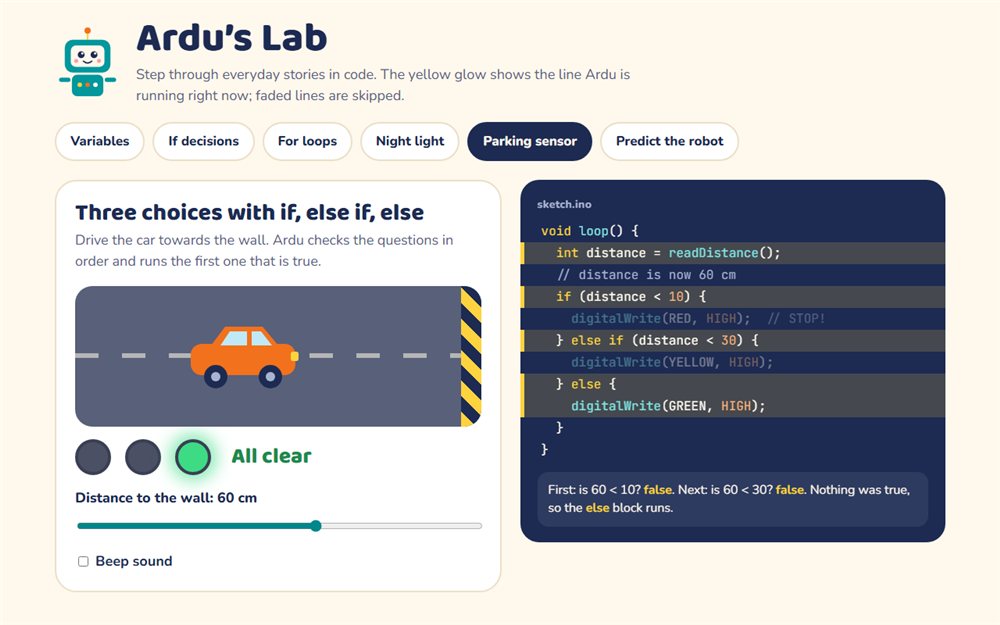
Simulation-based interactive classes
Interactive lessons I built to teach coding through everyday stories: variables as labelled lunchboxes, if decisions, and for loops, plus a night light, a parking sensor, and a predict-the-robot game. The Arduino code highlights each line as it runs, and students guess what happens next.
For the MYP 3 unit Sustainable cities and communities, I created three levels of the Criterion A (Inquiring and analysing) template, each with a matching task-specific clarification. Every student works towards the same criterion, with scaffolding that matches where they are.
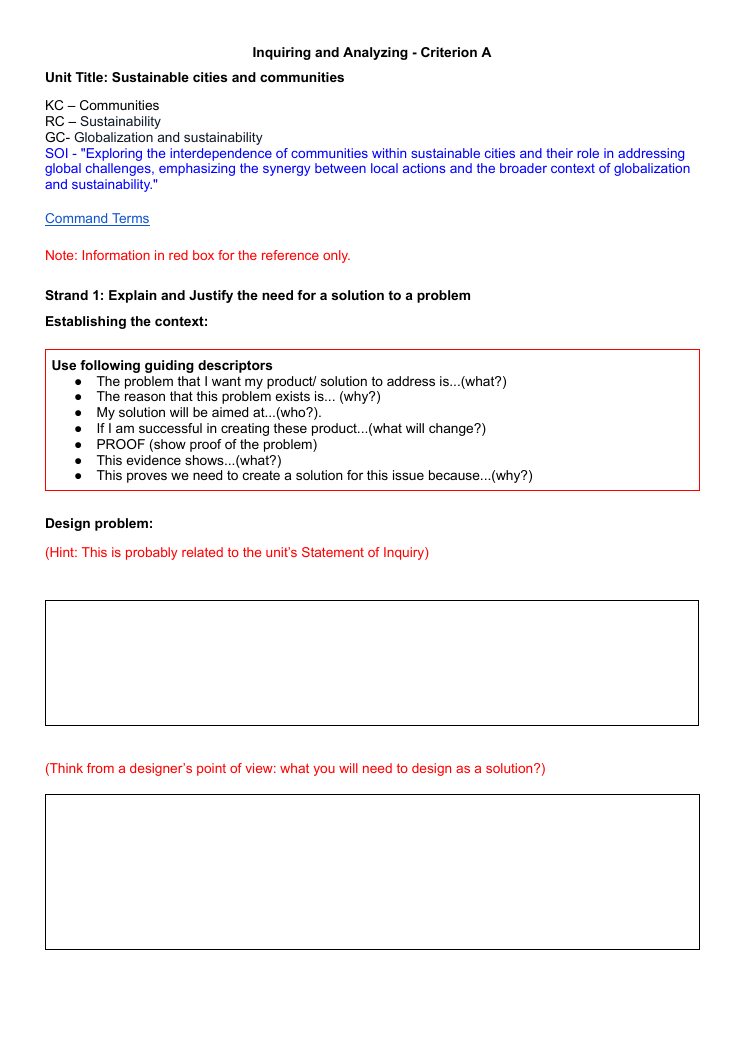
The most scaffolded version, with sentence starters, guiding descriptors, and hints for each strand.
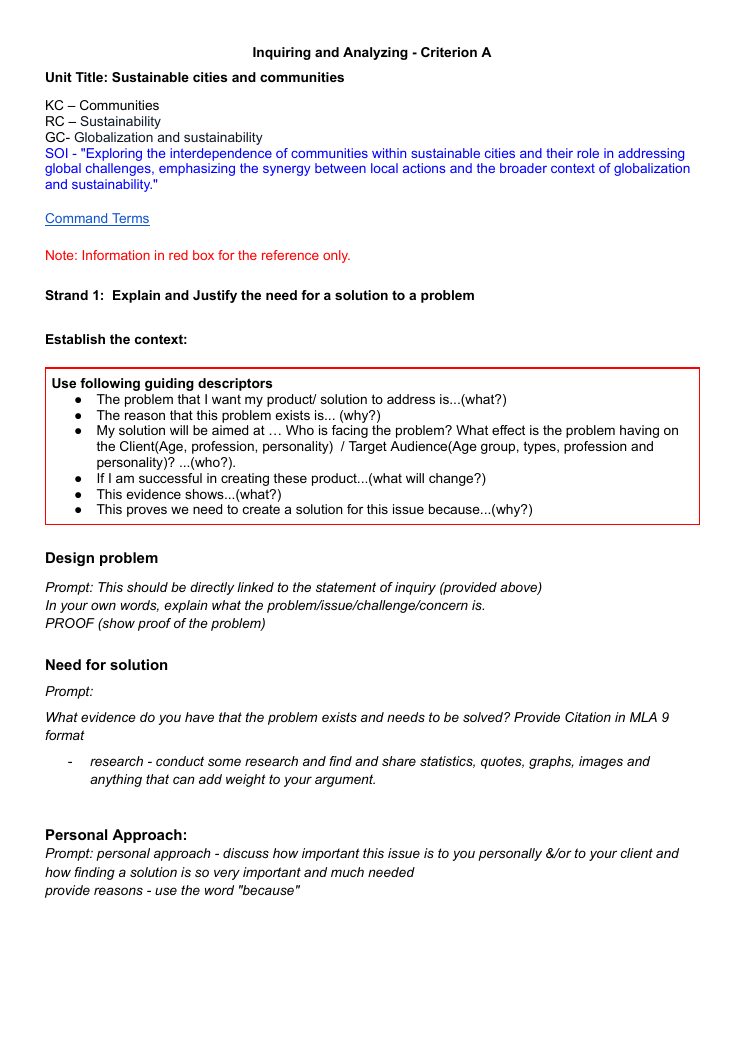
Students explain the need for a solution for a specific client or target audience and plan their research, with some guidance.
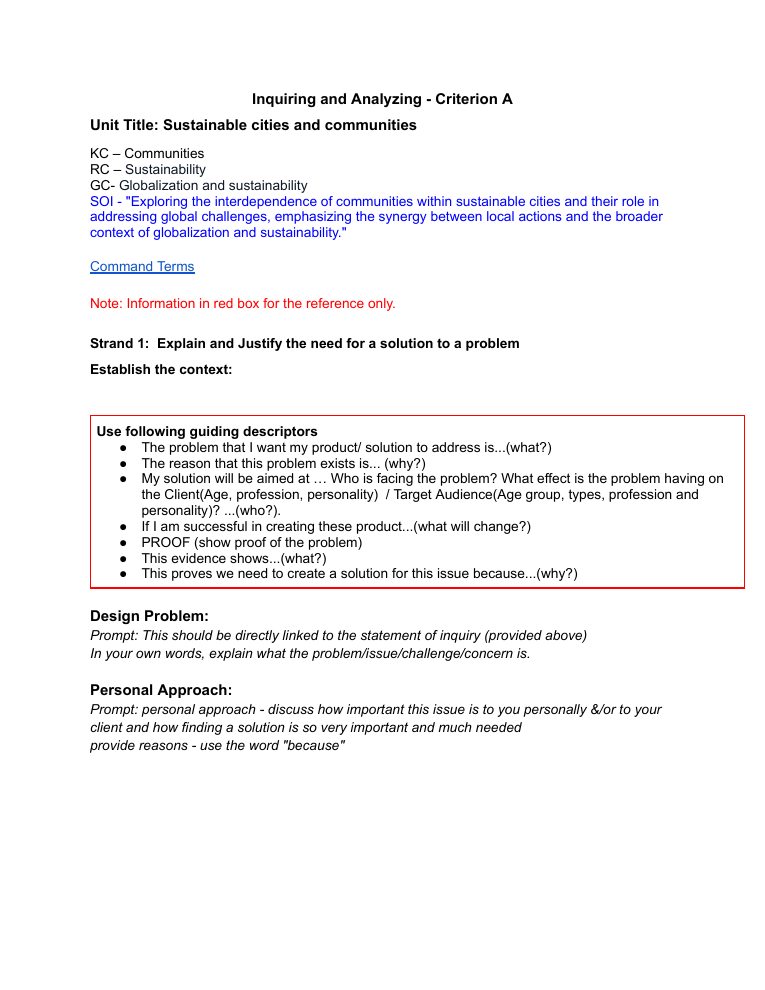
Minimal scaffolding. Students explain and justify the need, present proof of the problem, and build a detailed, prioritised research plan.
Projects from my MYP Design classes. Student names and faces are always hidden.
Students designed quiz-style board games with a simple circuit: touch the probe to a matching pair and the light comes on. The back of each board shows the wiring they planned and built.
An interdisciplinary unit with Humanities. Students researched a culture and created an artwork that lights up, soldering LED circuits into their designs.
Hands-on electronics units where students built and tested line-following robots, remote-controlled boats, and Arduino sensor prototypes.
ATL focus: critical thinking (analysing, debugging, and troubleshooting systems). Students received Arduino circuits with deliberate faults in Tinkercad and had to find and fix the errors in the wiring and the code.
Excerpts from MYP 5 Design ePortfolios by students I supervised: the table of contents and the opening pages of Criterion A. Names and candidate codes are removed.
A conceptual design of a seat cushion that helps teenagers keep a healthy posture during long study sessions.
Designing a community centre that brings people of all ages and abilities together.
Casualwear smart clothing that helps young children build hygienic habits.
Exploring how modern science and natural remedies can combine in a wound-healing burn patch for teenagers.
A digital platform where teenagers can find peer support for their mental health.